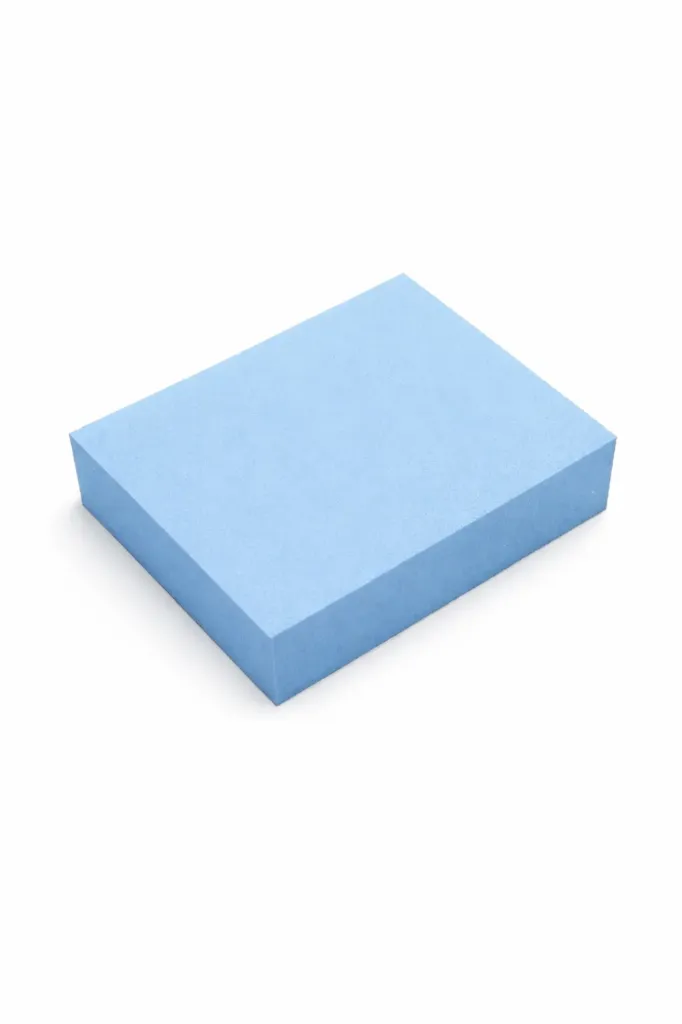
Rectangular Block - Plain Foam
Standard foam pads are the traditional industry staple for patient positioning. Unlike closed-cell alternatives, these are manufactured using an open-cell structure, where the internal "bubbles" are interconnected rather than sealed.
|
Dimensions (cm) |
23 x 18 x 6 |
Key Characteristics
Breathability and Comfort: The interconnected pores allow air to circulate freely through the material. This makes standard foam exceptionally soft and "breathable," providing excellent short-term comfort for patients who may be sensitive to firmer surfaces.
High Conformability: Open-cell foam is highly compressible, allowing it to contour easily to the patient's anatomy. This is particularly useful for stabilizing smaller extremities where a "cradling" effect is desired to prevent motion during an exposure.
Economic Efficiency: Standard open-cell foam is the most cost-effective solution for high-volume clinics. It provides a lightweight, portable option for basic positioning needs where specialized fluid resistance is not the primary requirement.
Important Considerations
Absorbency: Because the cells are open, this material acts like a literal sponge. It can absorb fluids, such as perspiration, blood, or contrast media. For this reason, standard foam is typically intended for use with a protective cover or as a disposable/single-patient use item to maintain infection control standards.
Radiolucent Performance: While still radiolucent, the cell structure is less dense than closed-cell foam. Over time, if the foam becomes compressed or saturated with cleaning chemicals, it may be more prone to showing "shadows" or artifacts on high-sensitivity digital receptors.
| Feature | Standard (Open-Cell) | Premium (Closed-Cell) |
| Feel | Soft / Compressible | Firm / Supportive |
| Porosity | High (Absorbent) | Zero (Non-porous) |
| Cleaning | Difficult (Requires Cover) | Easy (Wipeable) |
| Best For | Budget / Single-use | Longevity / Hygiene |