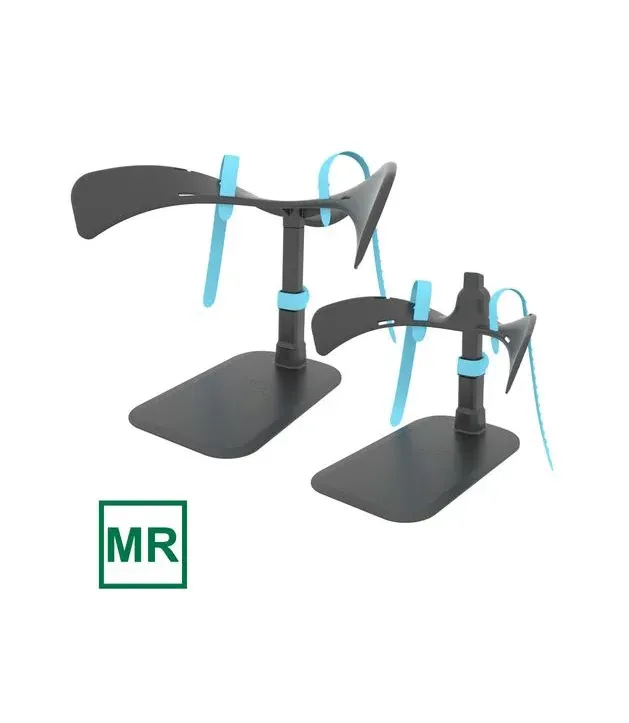
Overhead Arm Support (MR Safe)
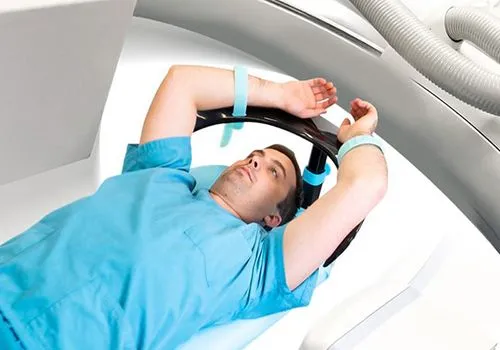
The Overhead Arm Support is the ideal radiology positioning device to secure your patient in the arms overhead position to improve access and imaging during C-arm, CT and MR.
It allows good access to the patient’s abdomen and removes unwanted image artefacts caused when the arms are left by their side. The ergonomic design comfortably and securely supports the arms of a supine patient above their head, eliminating the extreme shoulder flexion that can be challenging for those with limited mobility.
Capable of holding one or both arms in the supine position, the Overhead Arm Support is a suitable arm positioning device for patients under general anaesthesia, or awake.
The Arm Supports are available in two sizes:
Overhead Arm Support MR Safe (AM4000): Ideal for patients between 47 – 135 kg, it fits through CT/MRI bores equal or greater than 700 mm.
Overhead Arm Support MR Safe - Small (AM4100): Designed for children and small adults between 13 – 47 kg for improved patient comfort and fit. The smaller wing design allows it to fit through CT/MRI bores equal to or greater than 600 mm.

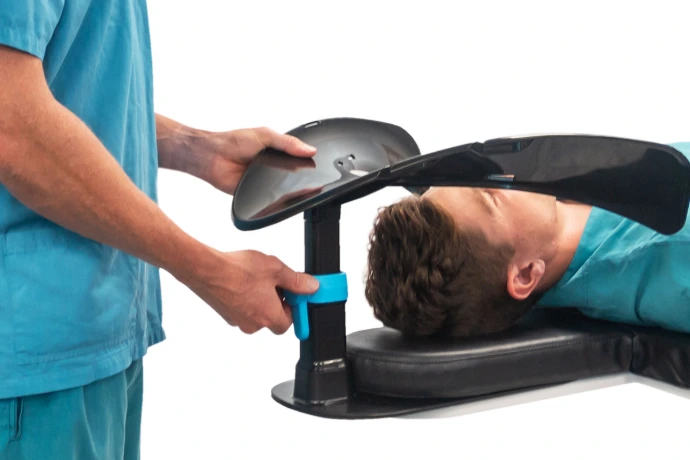
The easy to install base board can be placed above or below the mattress. It is secured using the patient’s weight and simply locked at the optimum level for the patient using a single-handed lever action..
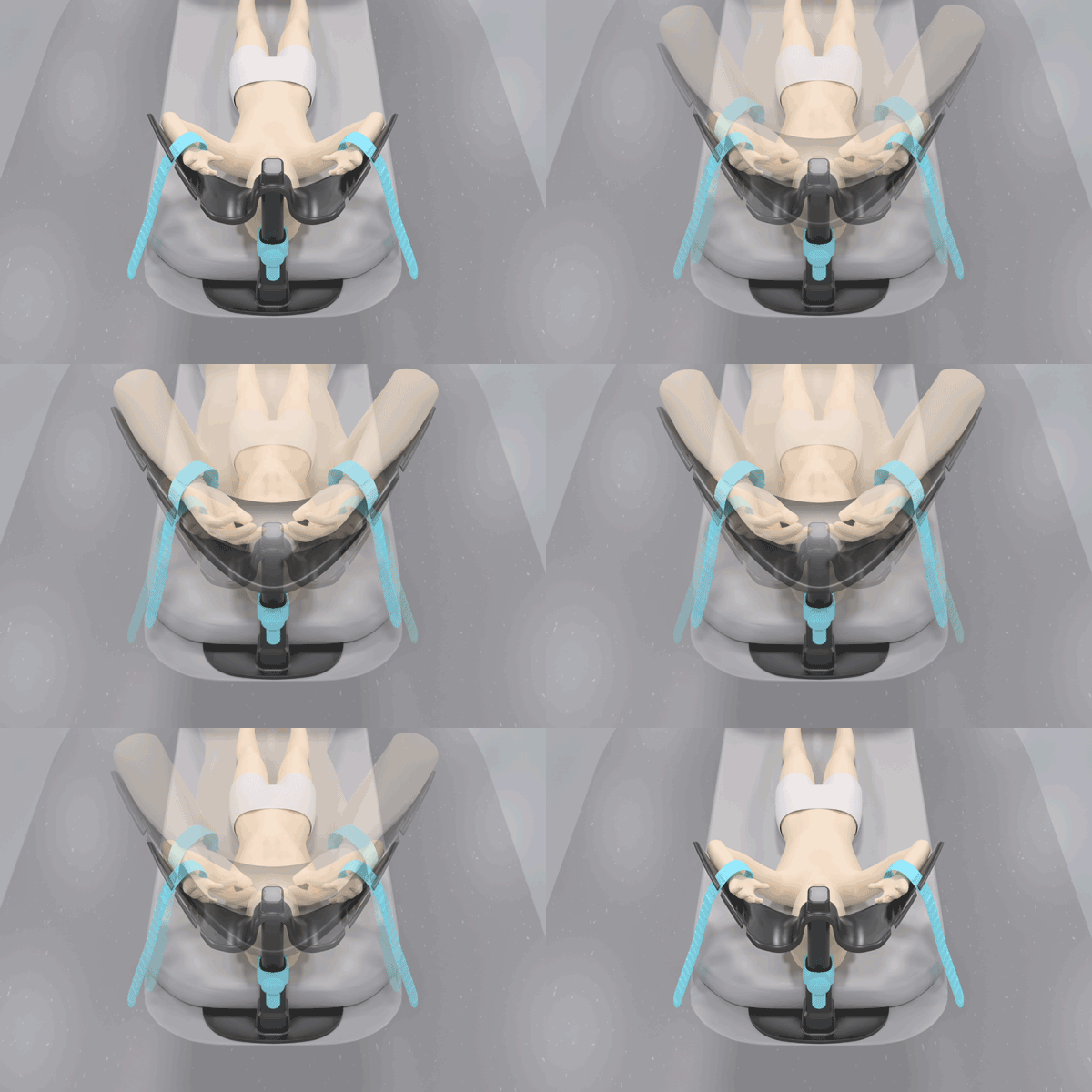
Accommodates a broad range of patients. Options available for children and adults and each unit is height adjustable for optimum flexibility.
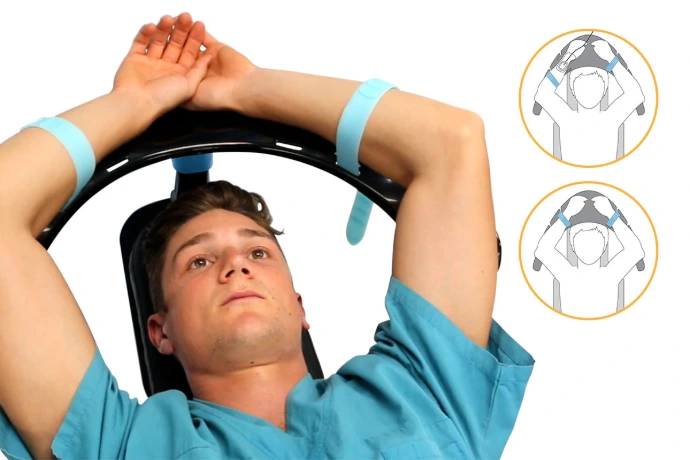
The two strap mount locations for each arm allows flexibility when considering IV access, and helps secure the arms during imaging. A 2023 study has concluded that by elevating the patient's arms above their head during F/BEVAR procedures, there is a 30% reduction in radiation exposure. Click here to view the independent study.