
True
 
Follow us
X-ray plate covers
What they are, why UK teams use them, and how they help with positioning
25 febbraio, 2026 di
X-ray plate covers
ROTHBAND, Paul Dixon
/


What is an X-ray plate cover?

In simple terms, it’s a disposable sleeve that the plate or digital detector is placed into before positioning. Because plates/detectors are often positioned directly against the patient (or under them on beds and trolleys), they can be exposed to bodily fluids, dust and debris, and microorganisms transferred by contact. A cover creates a “between layer” so the plate/detector itself is less likely to become soiled.

After the exposure, the cover is removed and disposed of according to local policy, and the plate/detector can be returned to service more quickly.

What are plate covers made from?

Most plate covers are produced from polyethylene film, chosen because it’s tough for its thickness, fluid resistant, and radiolucent. They’re also typically latex-free, supporting safer use for patients and staff.

You’ll see different closure styles depending on workflow preference, such as open-ended sleeves, adhesive flaps, or zip-style seals. Some departments prefer roll formats for speed; others prefer boxed, individually separated covers for convenience and stock control.

Sterile vs non-sterile

  • Non-sterile covers suit routine imaging.
  • Sterile covers may be required when the plate/detector needs to enter a sterile field (for example, certain theatre/procedural environments).

Why they matter: hygiene, equipment protection, and smoother placement

1) Supporting infection prevention practices

Plates/detectors are shared across patients all day. A single-use cover helps reduce the chance of contamination being carried from one exam to the next, and can support local IPC procedures—particularly where contact precautions are in place.

2) Protecting plates and detectors from fluids and wear

Digital detectors and imaging plates are costly. Covers help reduce exposure to spills and splashes, and can also limit how often the plate/detector surface needs aggressive cleaning—helpful for long-term equipment care.

3) Making positioning easier (and reducing strain)

A practical benefit many teams notice immediately is handling. A low-friction cover can help the plate/detector slide into position with less resistance, which can reduce awkward pushing/pulling for staff, minimise patient movement during placement, and speed up positioning in busy environments.

Where plate covers are commonly used

  • Wards and bedside imaging
  • Emergency and trauma cases
  • Theatres/procedural areas (sterile covers where required)
  • Dental imaging (sensor sleeves and barriers)
  • Mobile imaging services (where conditions vary and turnaround matters)

What makes the Rothband Sliderer unique

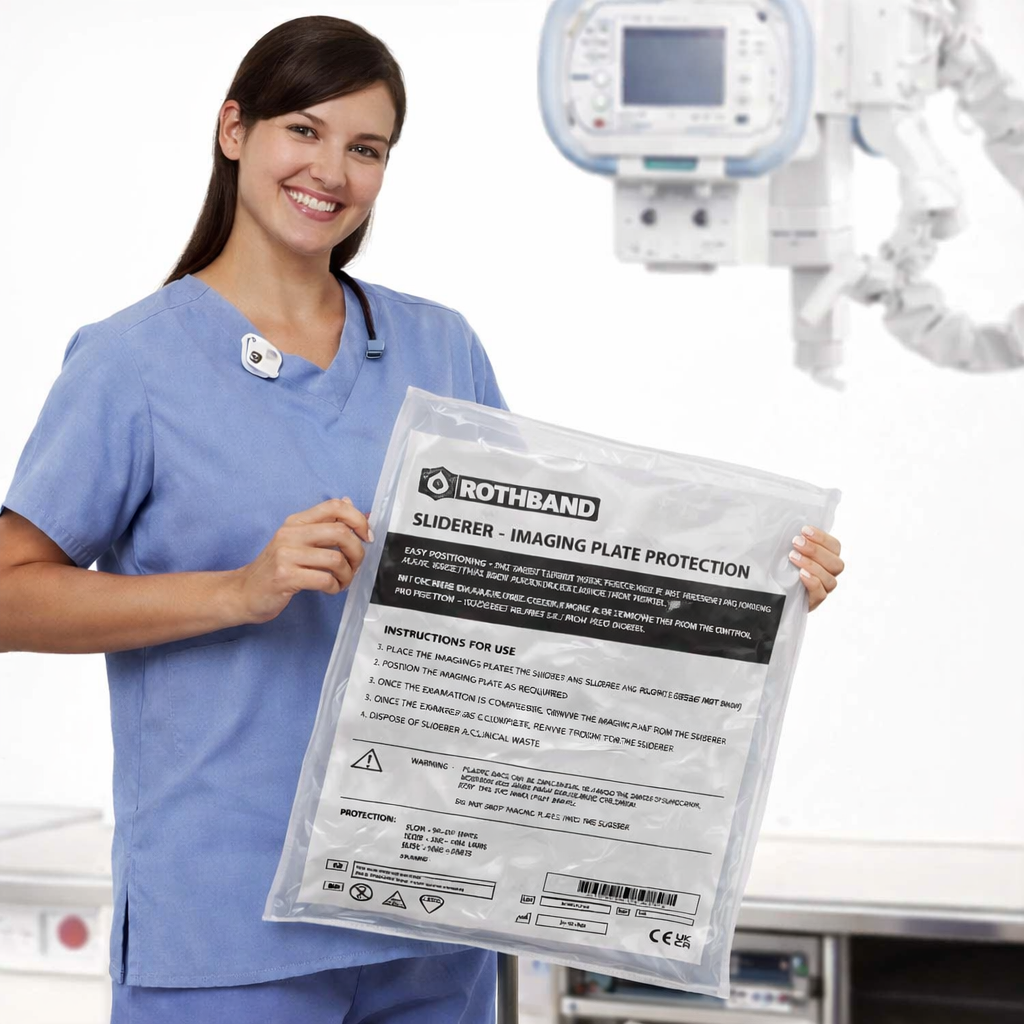
Many plate covers focus primarily on barrier protection. The Rothband Sliderer Cassette Bag is designed to do that and improve the physical workflow of positioning.

Sliderers use a proprietary formulation that makes the material notably slippy, which helps when the X-ray plate is already behind the patient and needs adjustment. In practice, that means:

  • Easier repositioning of the plate once it’s in place
  • Less tugging on bedding and clothing
  • Reduced need to move the patient just to fine-tune plate position
  • Smoother placement and removal for staff

Rothband Sliderer Cassette Bag (summary)

Made from an extremely strong but slippy plastic which:

  • Assists in plate placement and infection control
  • Easier placement and removal of plate/detector
  • Helps reduce back, arm and neck strain for staff
  • Minimises movement required by the patient
  • Protection of plate/detector from fluids and contamination
  • Protection of staff and patients
  • Dispose of as clinical waste (in line with local policy)

View the Rothband Sliderer Cassette Bag

FAQs

Do plate covers affect image quality?

Quality covers are made from radiolucent plastic designed to allow X-rays to pass through without interfering with the image.

Should we use sterile or non-sterile plate covers?

Non-sterile covers are typically used for routine imaging. Sterile covers may be required when the plate/detector must enter a sterile field. Follow local policy and procedure for your setting.

How should used plate covers be disposed of?

Dispose of used covers in line with local clinical waste policy and the level of contamination present.

What makes the Rothband Sliderer unique


Many plate covers focus primarily on barrier protection. The Rothband Sliderer Cassette Bag is designed to do that and improve the physical workflow of positioning.
Sliderers use a proprietary formulation that makes the material notably slippy, which helps when the X-ray plate is already behind the patient and needs adjustment.



X-ray plate covers
ROTHBAND, Paul Dixon 25 febbraio, 2026
Condividi articolo
Labels
Archivio

To install this Web App in your iPhone/iPad press and then Add to Home Screen.